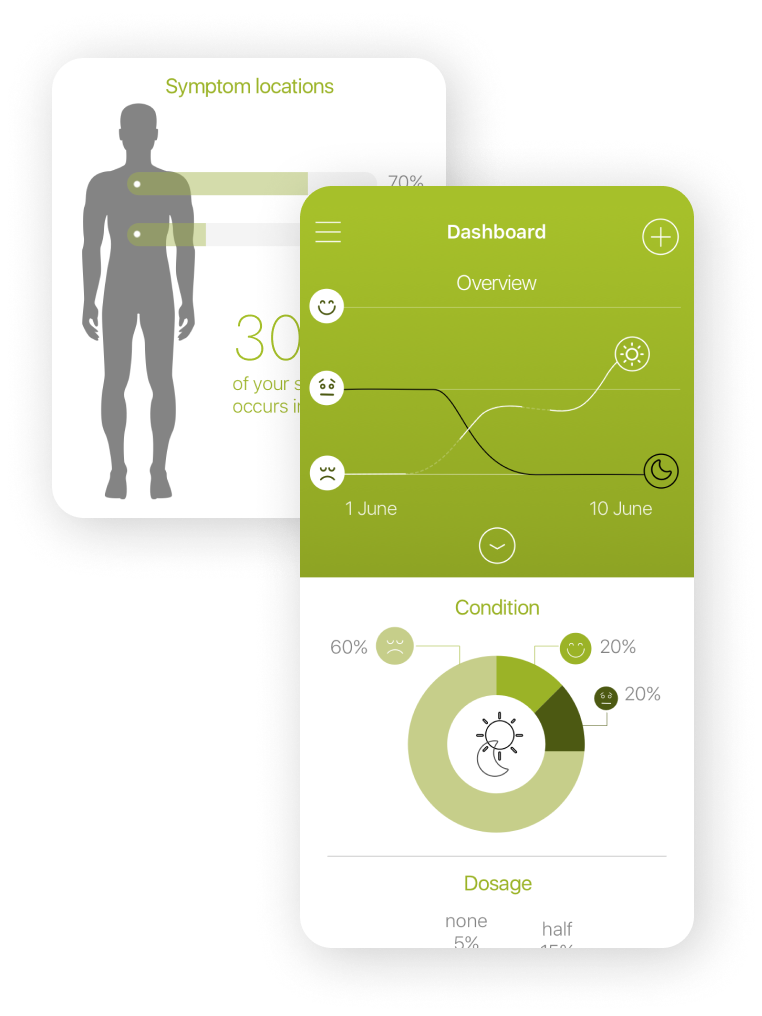
GERD affects an estimated 18 to 28% of the population in Western countries, often starting as everyday discomfort but capable of leading to serious complications if left untreated. Diet is one of the few levers patients can pull themselves, but trigger foods are hard to identify from memory alone, making tracking essential rather than optional.

Fast enough for patients, useful enough for clinicians
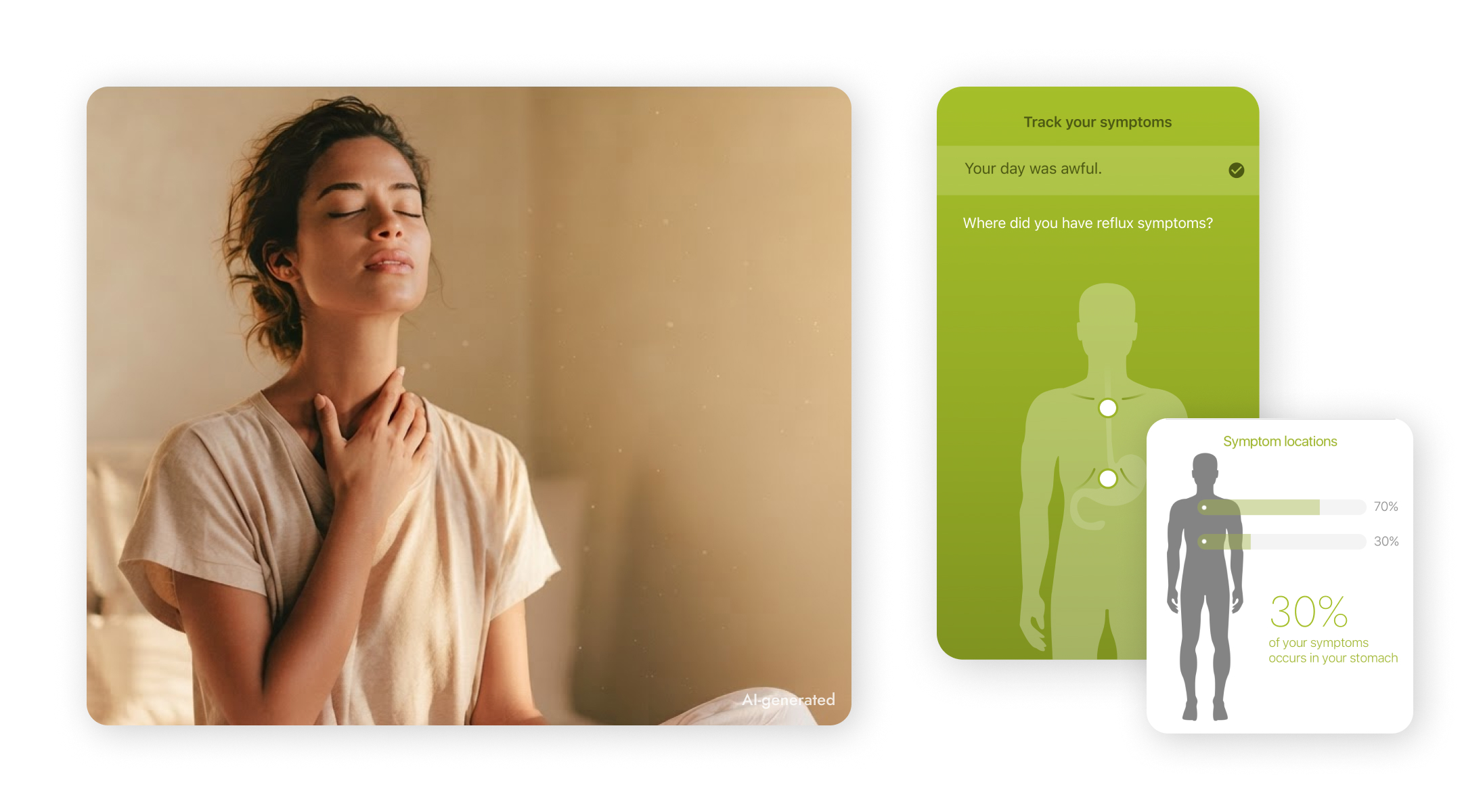
Patients needed logging fast enough to survive a real day. Clinicians needed something more reliable than a patient's best guess at the last few weeks. Most tools in this space over-serve one side or the other.
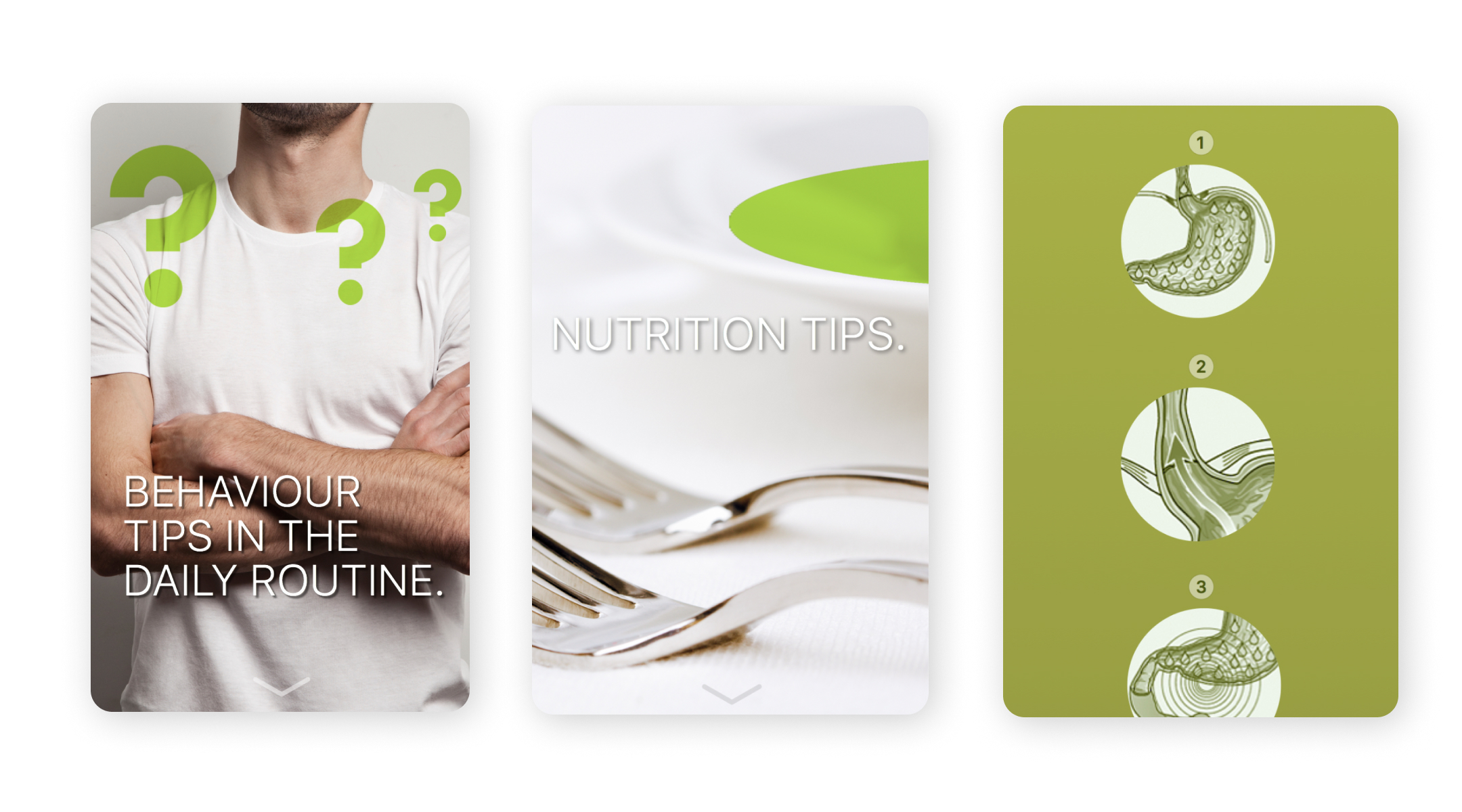
Built around the therapy, not just the symptom
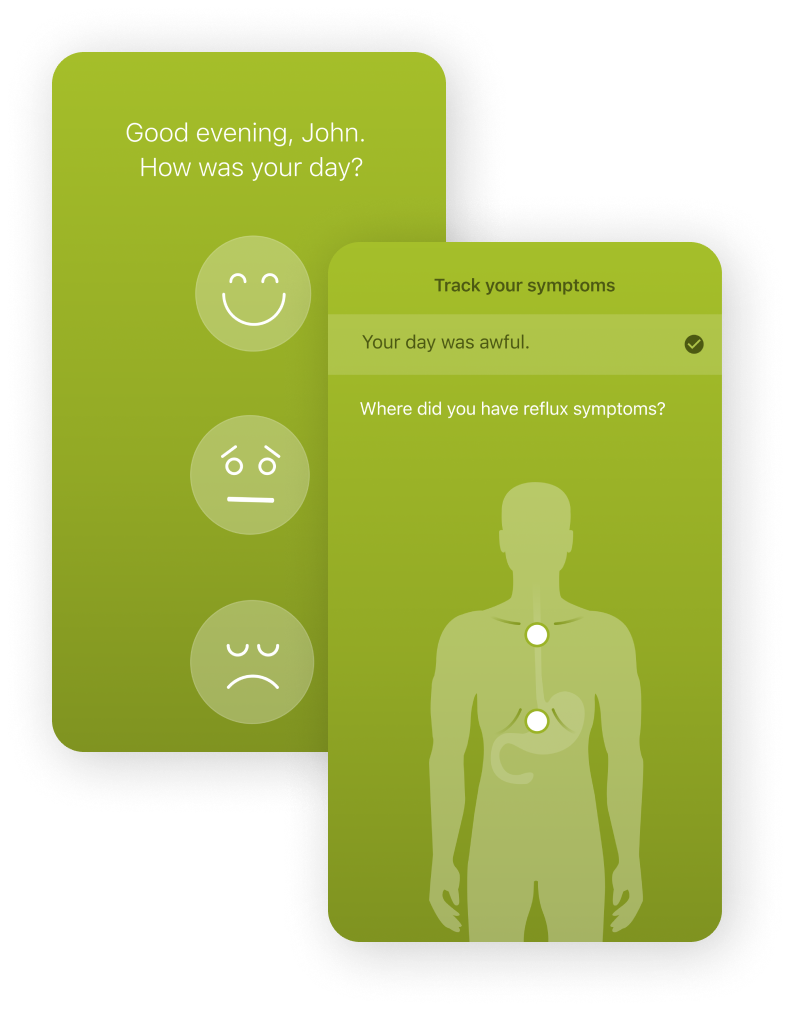
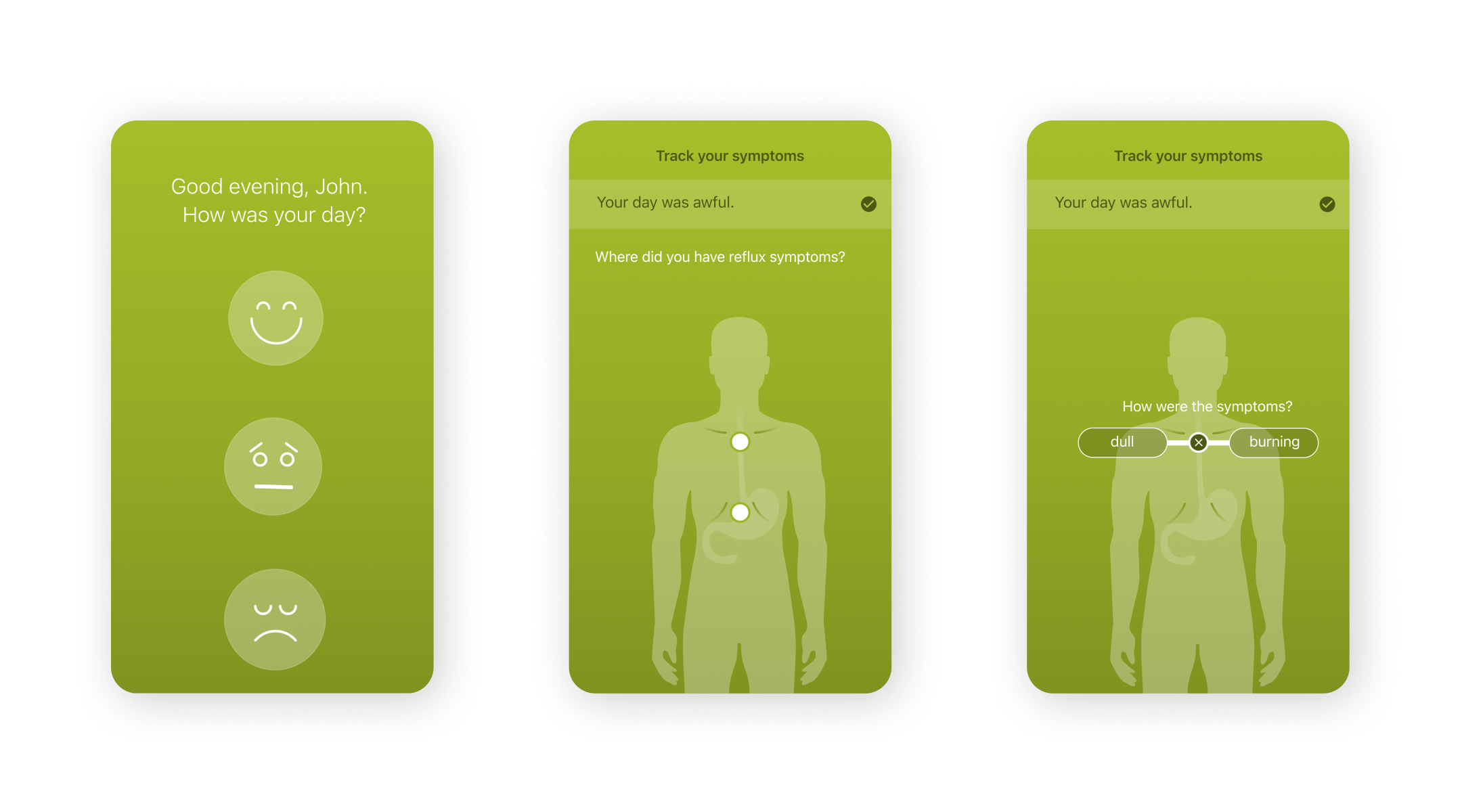
We built symptom logging around a 15-second target across 10-day observation cycles, capturing wellbeing, medication, and diet in patient language rather than clinical terms. Day and night were tracked separately by design: Takeda's therapy releases its active ingredient in two time-delayed doses, improving nighttime symptoms specifically, and the split let that improvement show up in the patient's own data.
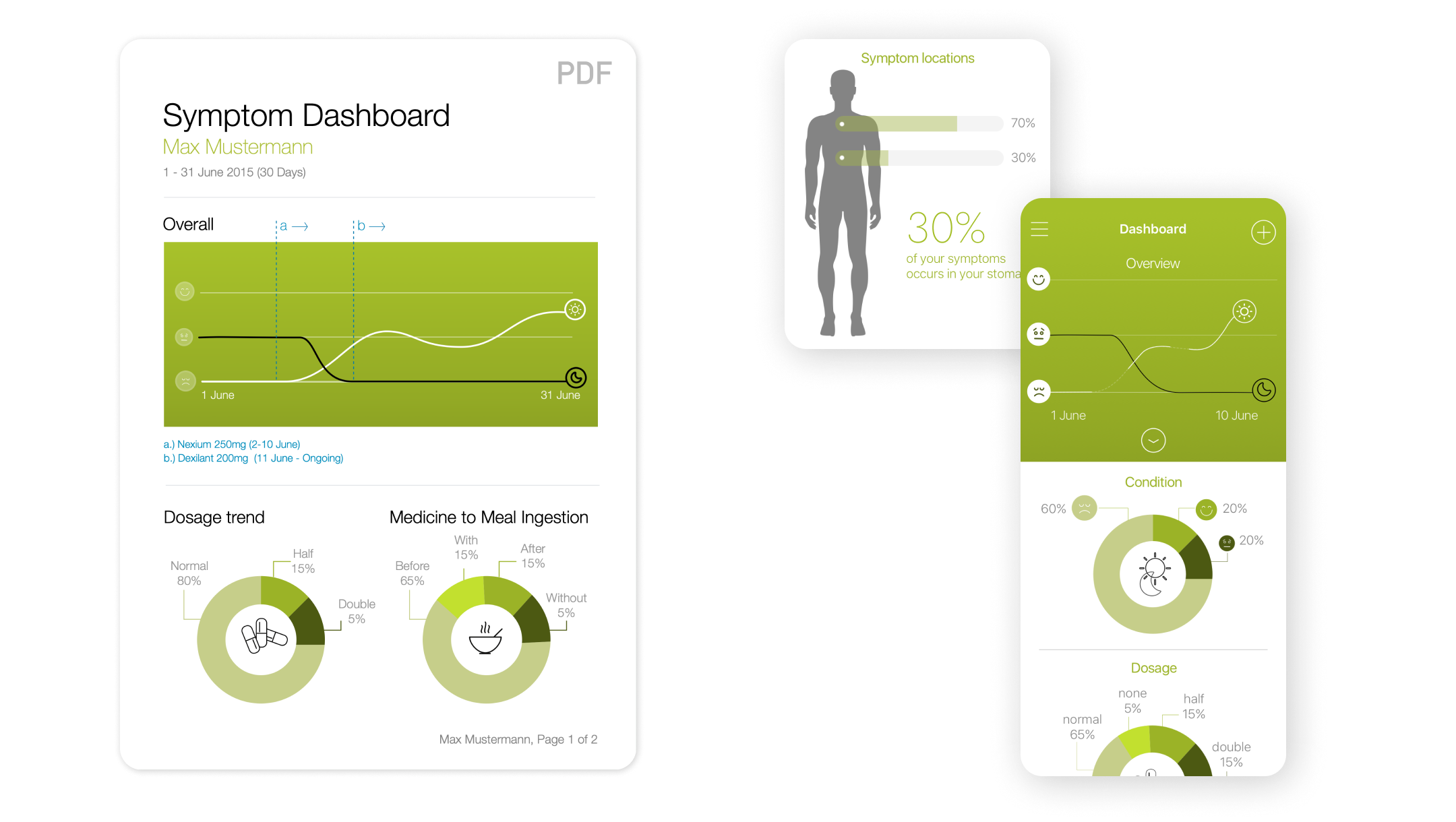
All data stayed on the patient's device by default. The only way information left the app was a PDF export the patient triggered themselves, shared via HIN (Health Info Net: the swiss standard for secure email for healthcare professionals) straight into the consultation.
A clearer conversation between patient and clinician
The optimized experience lets patients capture symptoms intuitively, in the shortest time possible. The dashboard is easy to read at a glance, strengthening communication between patient and clinician. The project was shortlisted for the Mobile Business Award by the University of St. Gallen, recognized for connecting patients, clinicians, and the therapy itself into one coherent experience.