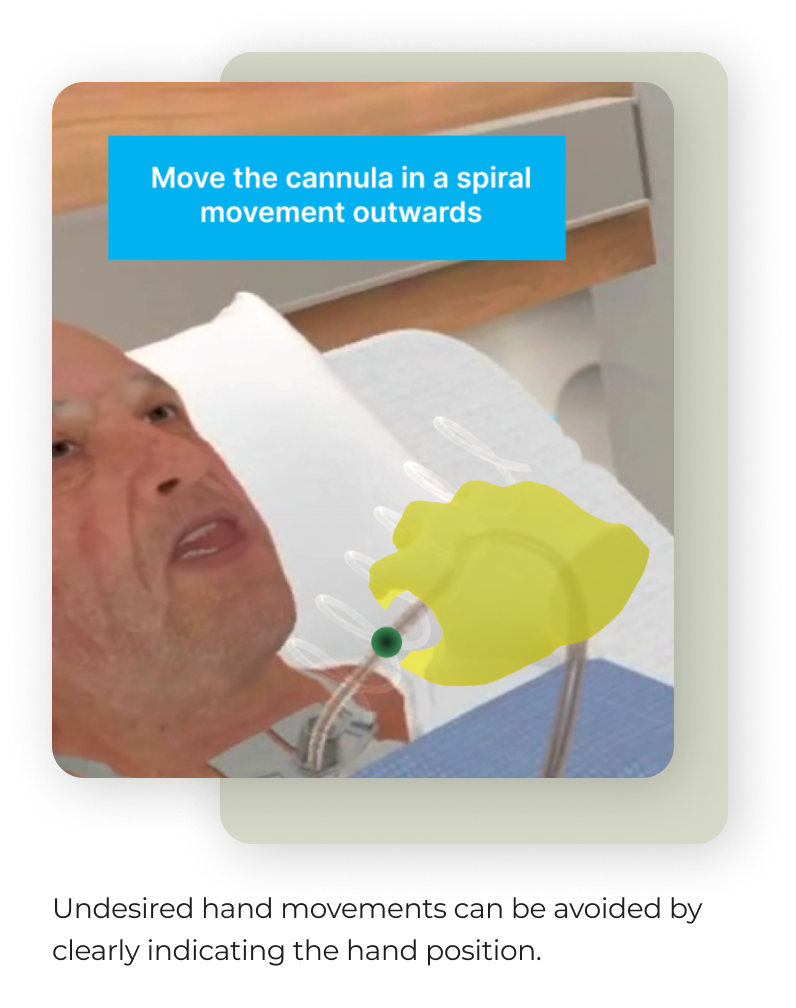
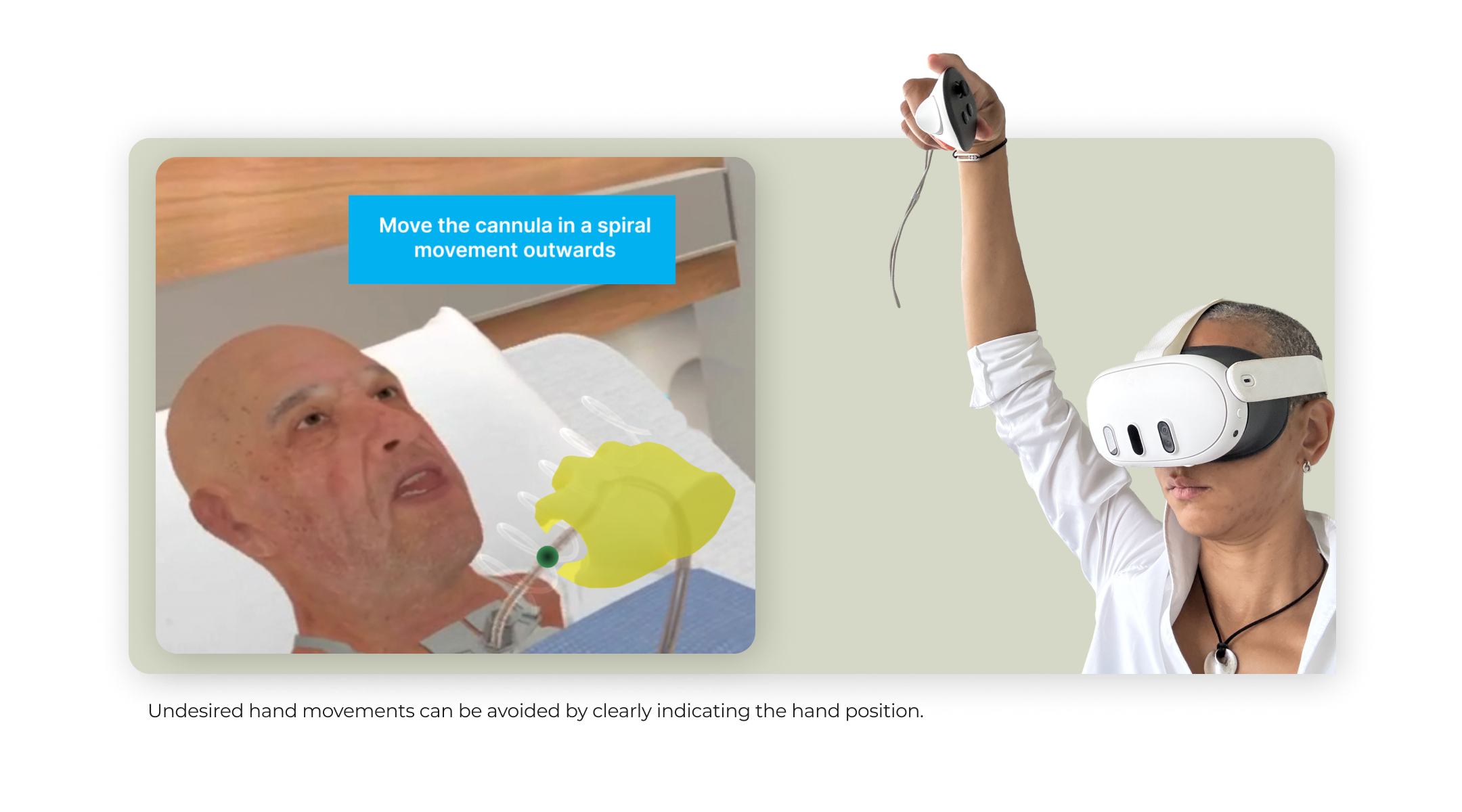
Meta Hospital builds evidence-based and clinically validated VR training for healthcare professionals (HCP), giving them a space to train real procedural knowledge in VR before applying it in a real life situation. Most of these HCPs have trained the traditional way, but have never trained in VR immersive enviroment. That makes the environment almost as unfamiliar as the learning sequence it’s teaching. When interacting with the immersive world becomes difficult, it can compete directly with the learning experience.
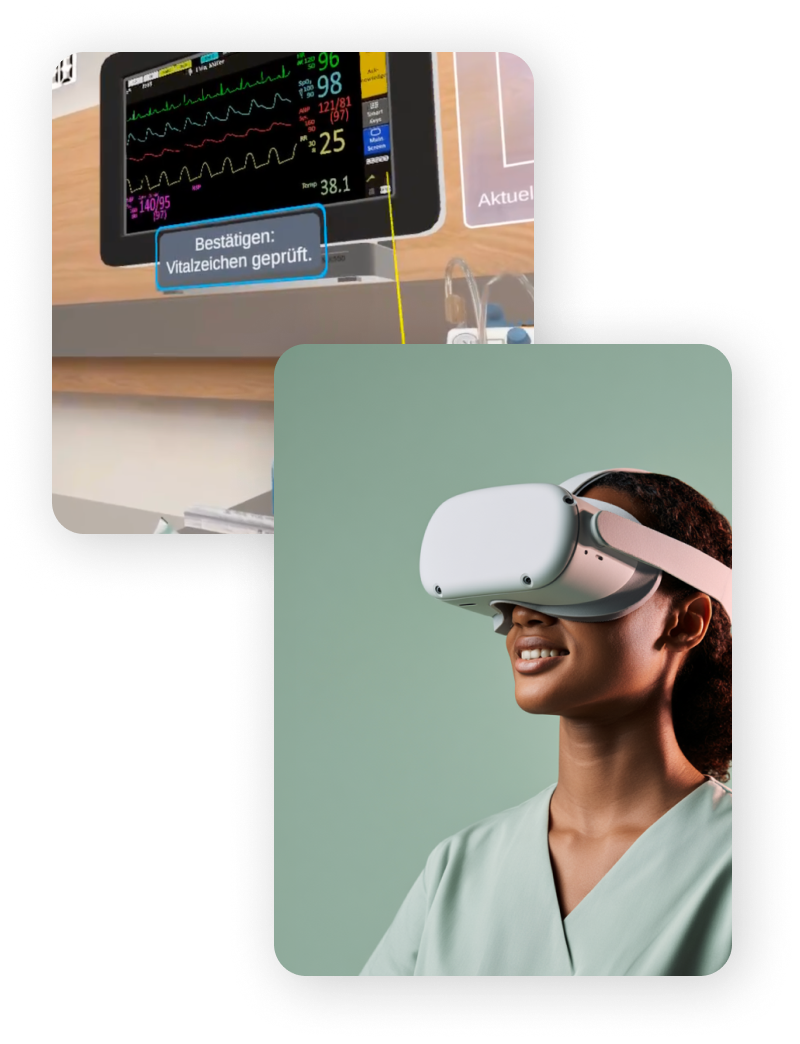
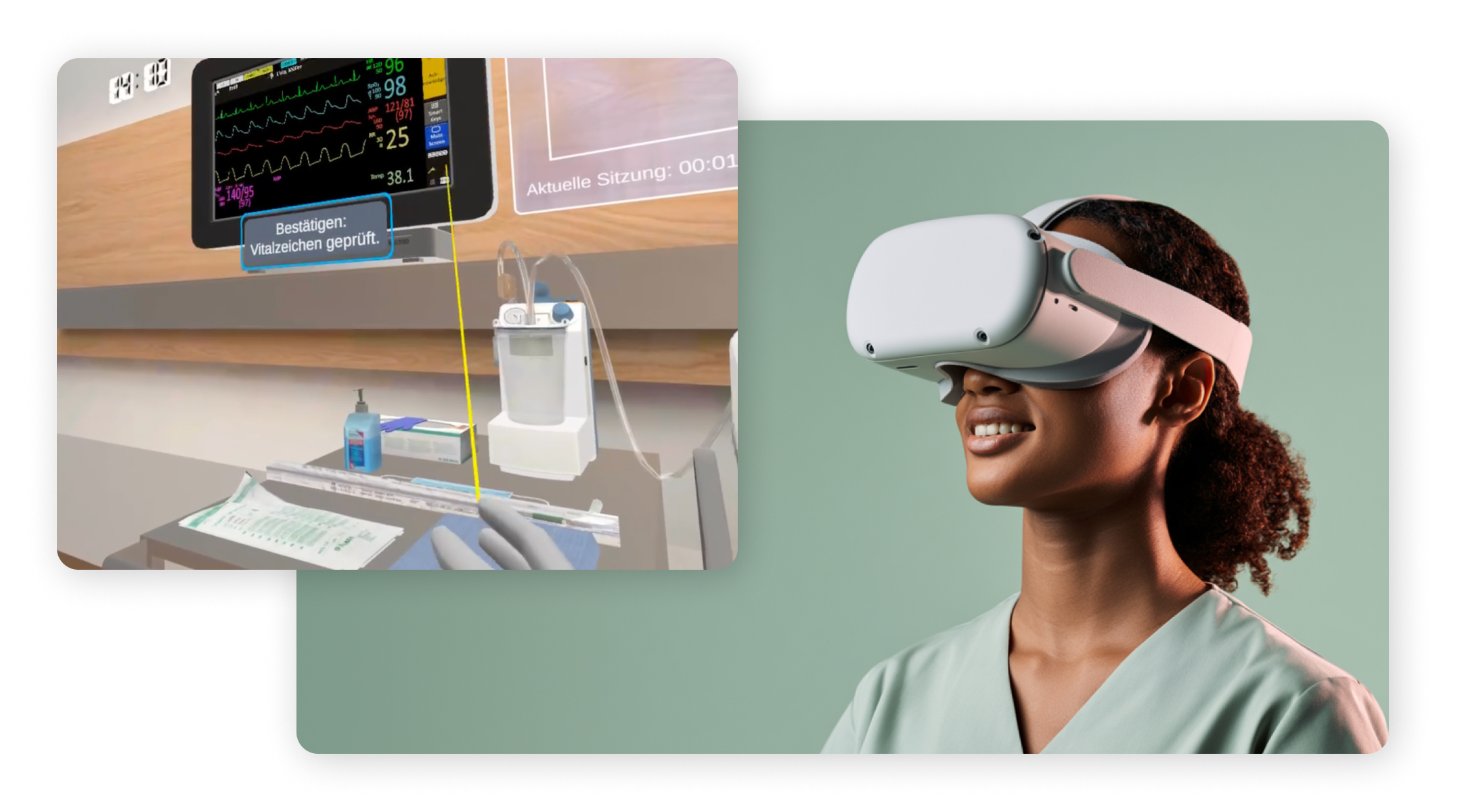
Meta Hospital knew there was friction in the training, but the VR team needed a structured way to identify exactly what was getting in the way of a smooth training experience. As well as how optimize ahead of their planned serial production.
At the same time, they wanted to explore how certain interactions could be simplified without compromising what they were designed to teach. Some of what feels effortless in real life depends on a level of physical precision that is challenging to transfer into VR.
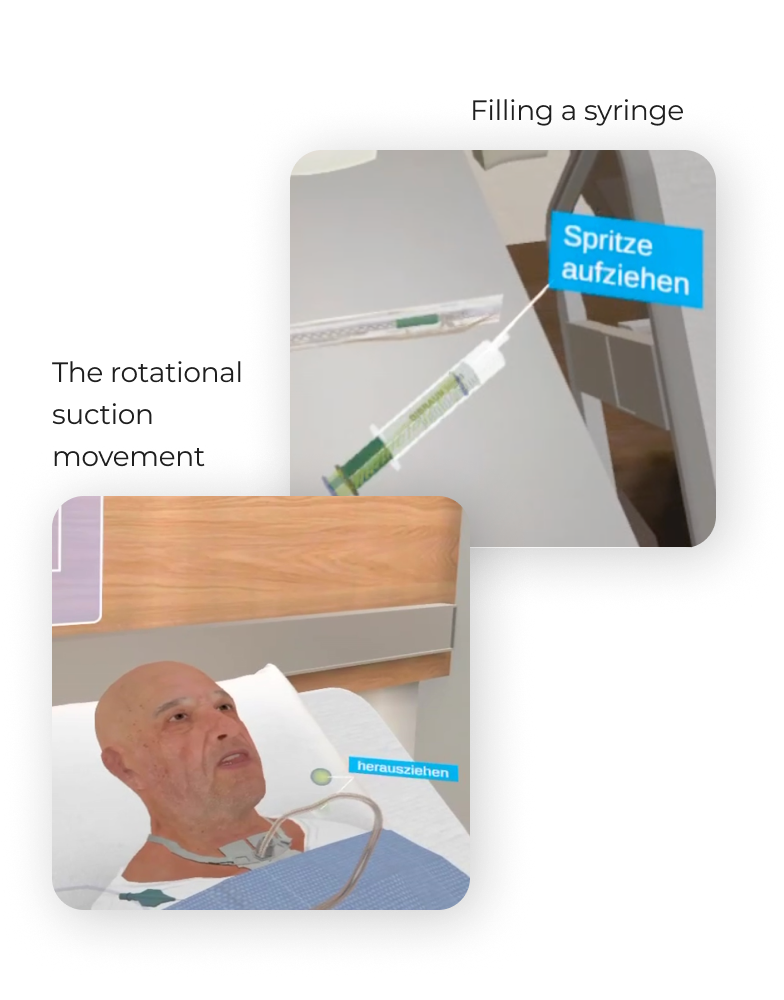
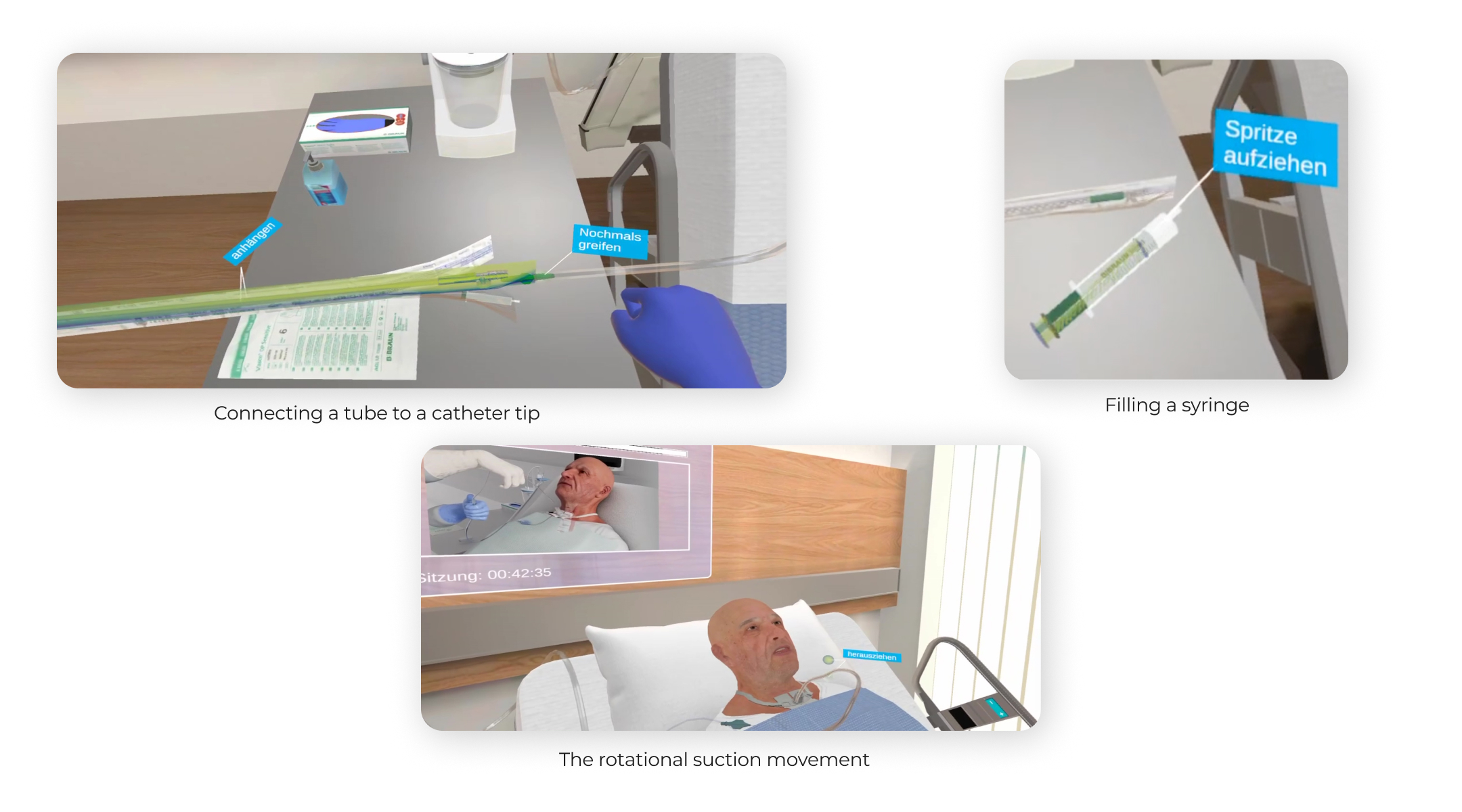
To find out what was actually breaking for the target users, we started with a survey. We designed it together with Meta Hospital and distributed to HCP students through Careum Bildungszentrum. Three interactions came back as the clearest pain points: the rotational suction movement, filling a syringe, and connecting the catheter tip to the suction tube.
From there, we immersed ourselves in the medium itself. We tested a range of state of the art VR trainings, escape rooms and experiences to build a general feel for VR conventions before touching Meta Hospital's platform. Then we ran the training sequence ourselves, repeatedly, to experience the friction firsthand.
With the survey data and our own hands-on review as raw material, we ran a full synthesis process: gathering findings, clustering them into patterns, and distilling those patterns into clear insights.
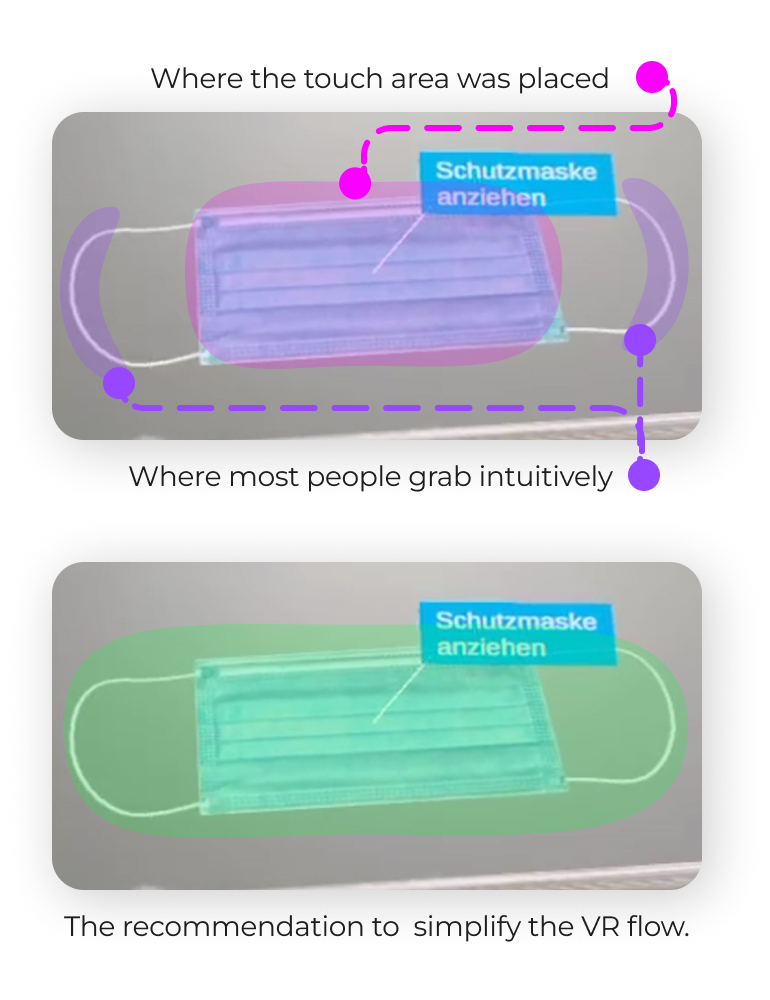
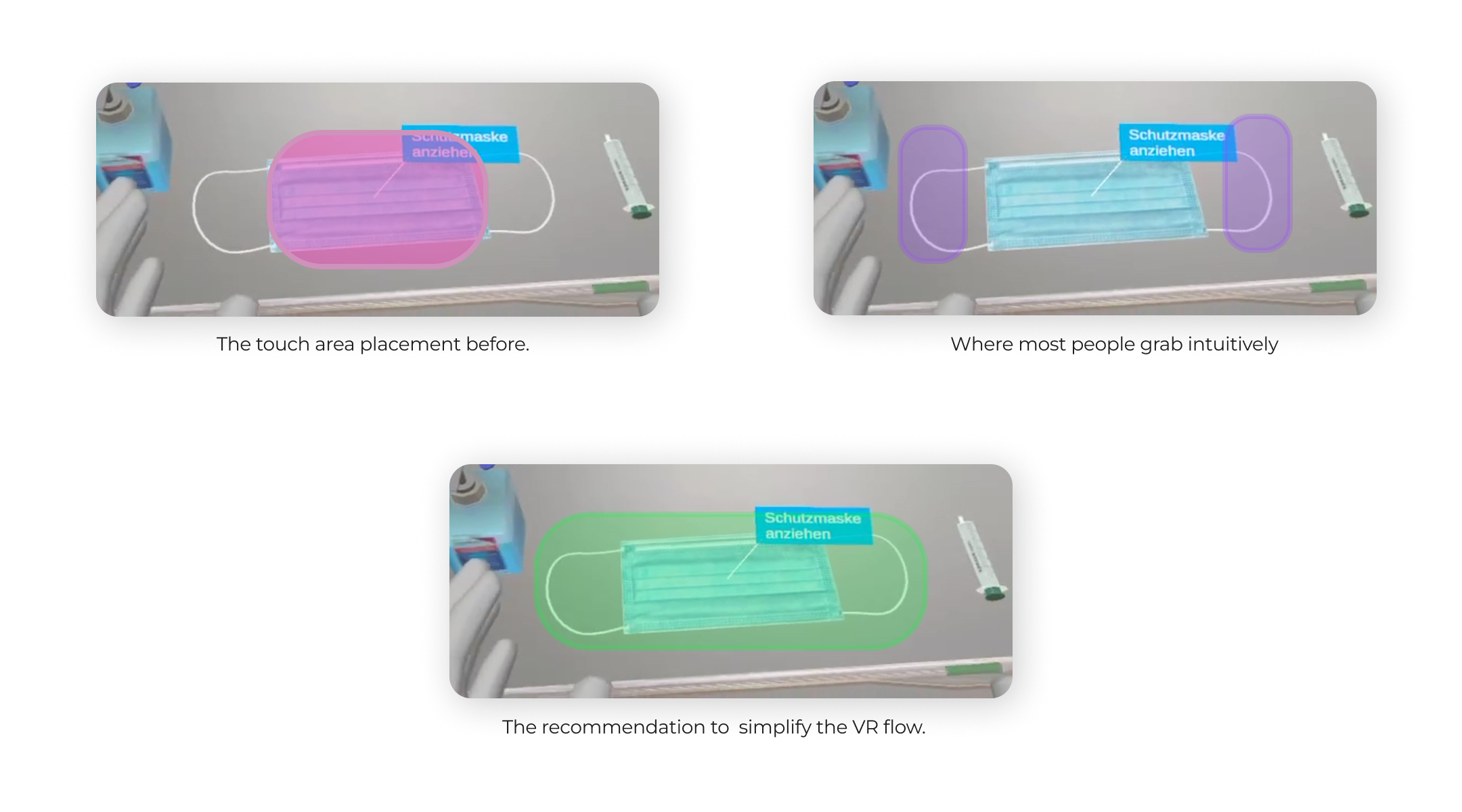
Grabbing turned out to be a recurring friction and not always for the reason you'd expect: In some cases, the friction came from a mismatch between how users intuitively reached for an object and how the interaction had been designed in VR. Users reaching for a face mask by its earloops, the way they would in real life, found that nothing happened, because the grab area had been placed in the center of the mask instead. None of this had anything to do with the procedure itself. It was VR friction, not procedural friction, but trainees couldn't tell the difference: it broke immersion and pulled focus from the task at hand.
Those insights shaped concrete solution proposals, prioritized against effort and impact.
It also surfaced a critical question yet to be answered: is the goal to teach the steps, or the exact motion for muscle memory? Take connecting the catheter tip to the tube: there's a difference between knowing you need to connect the two, and having to align it exactly to the right angle so it slots into place.
There is not one answer, it is something that needs a case by case decision by a clinician.
As a final step, we mapped every solution back to the three most challenging interactions identified in the beginning.
What started as a feeling that something wasn’t quite working became a clearer picture of where the friction came from. By looking at the experience from the learner’s perspective, we could distinguish between VR-specific interaction issues and challenges inherent to the training itself.
Across the evaluation, usability issues were identified, some of which severe enough to distract from the learning goal. But the value wasn’t simply in finding problems. We gave Meta Hospital a prioritized view of where friction was getting in the way of learning, and a clear direction for what to improve next.
Meta Hospital's production team integrated the recommendations directly into the existing learning sequence, letting their education centers resume training after summer break with a noticeably improved version, without waiting on a full redesign cycle.
By naming vague, hard-to-pin-down problems precisely, we made them easier to understand and act on. We backed every recommendation with real learner data and best practices. This helped put Meta Hospital’s design, production, and education teams on the same page, with the user perspective more firmly at the center of how they build.